
Journals
-
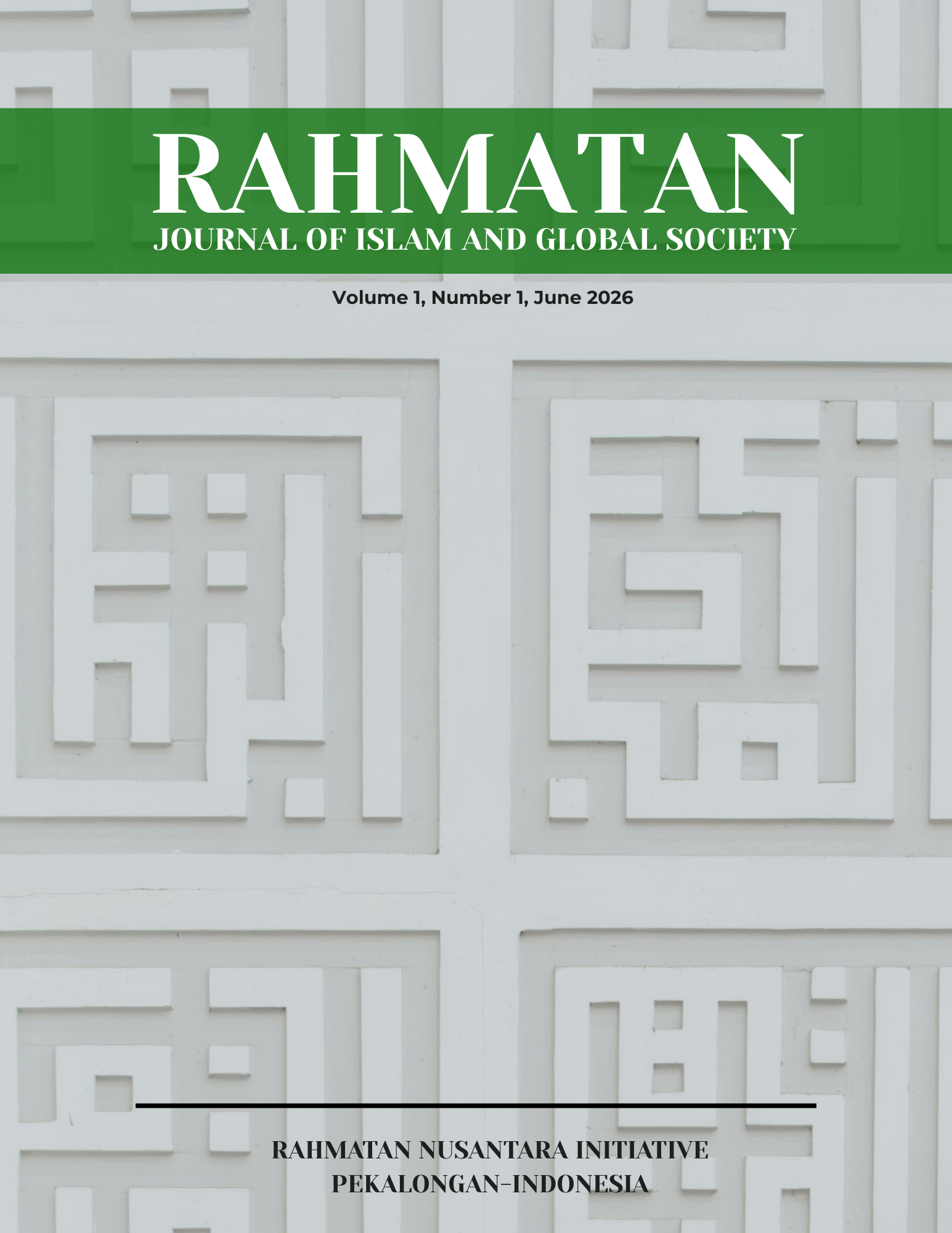
Rahmatan: Journal of Islam and Global Society
Journal title Rahmatan: Journal of Islam and Global Society Initials Rahmatan Journal Rank Frequency 2 issues per year (June and December) DOI prefix by 
Online ISSN XXXX-XXXX ISSN XXXX-XXXX Editor-in-chief Ahmad Khotim Muzakka, M.A Publisher Rahmatan Nusantara Initiative Citation Analysis Google Scholar | Orcid | Rahmatan: Journal of Islam and Global Society is an interdisciplinary, peer-reviewed academic journal that explores the dynamic interactions between Islam and contemporary global issues. It serves as a platform for scholarly research on how Islamic values, discourses, and institutions engage with, adapt to, and shape modern social, political, cultural, economic, and technological developments across diverse global contexts. The journal welcomes contributions from the fields of sociology, anthropology, political science, religious studies, international relations, and related disciplines. Emphasizing both theoretical and empirical studies, the journal seeks to foster critical dialogue on topics such as Muslim communities in global diaspora, Islamic responses to globalization, inter-religious engagement, Islamic social movements, and the role of Islam in shaping global public life.
-
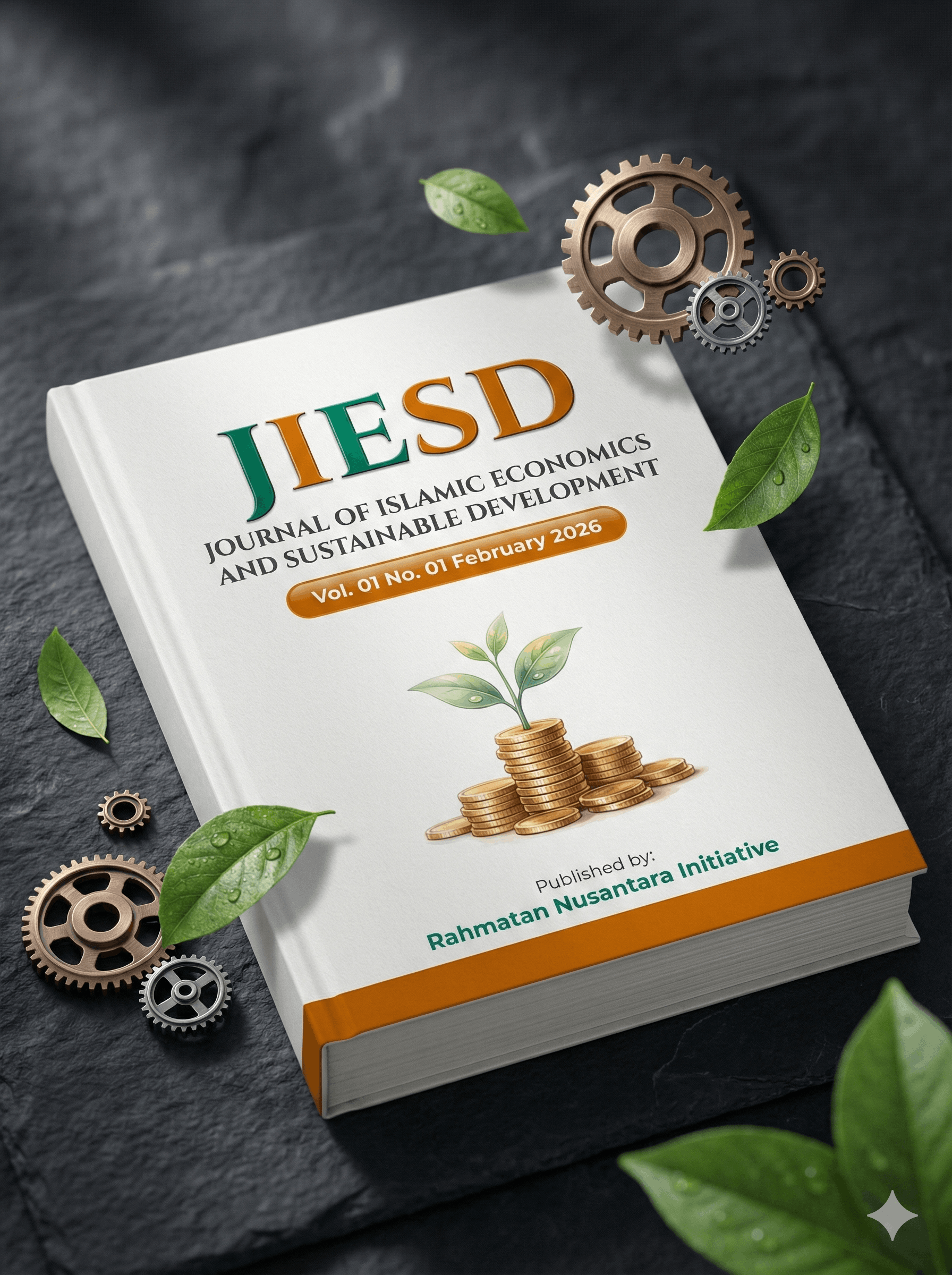
Journal of Islamic Economics and Sustainable Development
Journal title Journal of Islamic Economics and Sustainable Development Initials JIESD Journal Rank - Frequency Two issues per year (February and August) DOI Prefix - by Online ISSN XXXX-XXXX Print ISSN - Editor-in-chief Syamsul Arifin Publisher Rahmatan Nusantara Initiative Citation Analysis Google Scholar | ORCID | The Journal of Islamic Economics and Sustainable Development (JIESD) is a peer-reviewed, open-access academic journal dedicated to the advancement of knowledge and discourse in the fields of Islamic economics, finance, and the dynamics of sustainable development from an Islamic worldview. The journal serves as a platform for scholars, practitioners, and policymakers to share innovative research, critical perspectives, and applied solutions to socio-economic challenges. Topics of interest include, but are not limited to:
- Islamic economic theory and practice
- Shariah-compliant finance and banking
- Zakat, waqf, and Islamic social finance
- Halal industry and ethical entrepreneurship
- Sustainability in Islamic economic thought
- Islamic perspectives on environmental and social justice
- Circular economy and Maqasid al-Shariah
- SDGs (Sustainable Development Goals) in Muslim societies
- Islamic economics in digital transformation era